

Sharing thoughts, ideas, and unsolicited advice about memoirs, journaling, and creative nonfiction.
Why I read Benchley, and Why You Should Too...
Robert Benchley’s out-of-the-box humor will never grow old
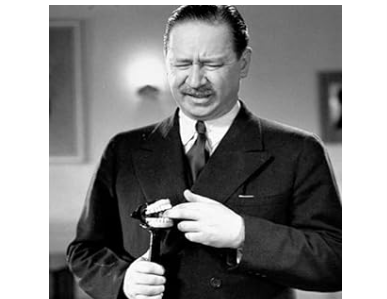

Robert Benchley published his first collection of essays in 1921. A drama critic and humorist, he wrote for newspapers and magazines, acted in radio and films, and generally made a delightful nuisance of himself until his death in November 1945.
But in order to truly appreciate the man, it’s best to just dive into his work…
A Talk to Young Men
(from “The Early Worm”)
Benchley prefaces his remarks to “Young Men” by calling this a graduation address on “The Decline of Sex,” not that that seems to mean anything, once we start reading further.
“Having been out in the world a whole month, it is high time that you learned something about the Facts of Life,” something about how wonderfully Nature takes care of the thousand and one things which go to make up what some people jokingly call our “sex” life. I hardly know how to begin.”
After describing how boring it is to watch butterflies and bees carrying pollen from one flower to another, Benchley moves on to the animal world.
“The next time you are at the grocers buying gin, take a look at his eggs. They really are some hen’s eggs, but they belong to the grocer now, as he bought them and is entitled to sell them…. If you will look at those eggs, you will see that each one is almost round, but not quite. They are more of an egg-shape. This may strike you as odd at first, until you learn that this is Nature’s way of distinguishing eggs from large golf balls. You see, Mother Nature takes no chances. She used to, but she learned her lesson.”
As for roosters…
“It is very proud and has a red crest on the top of its head… put there by Nature so that the hen can see the rooster coming in a crowd and can hop into a taxi or make a previous engagement if she wants to.”
So far, Benchley has done an admirable job of completely avoiding reproduction details. Let’s see how he does with fish.
“Fish are probably the worst example that you can find… They are just stupid, that’s all, and nowhere is their stupidity more evident than in their sex life… The carp is one of the least promising of all the fish. He has practically no forehead, and brings nothing at all to a conversation… Now the mother carp is swimming around some fine spring day when suddenly she decides that it would be nice to have some children. So she makes out a deposit slip and deposits a couple million eggs on a rock. This done, she adjusts her hat, powders her nose, and swims away, a woman with a past.”
One of Benchley’s specialties involved beginning with a stated theme, from which he would soon stray and never return to, unless it was to say that he’d run out of time, or lost total interest in the original subject. In the case of “A Christmas Garland,” it didn't take him long to lose the thread, not to mention the fact that the subject was totally inappropriate.
A Christmas Garland of Books
(from “20,000 Leagues Under the Sea, or David Copperfield”)
The first book amongst Benchley’s suggestions for holiday gifts is “Rubber Hand Stamps and the Manipulation of India Rubber.” He states that:
“Beginning with a short, and very dirty, history of the sources of India rubber, the author takes us by the hand and leads us into the fairy-land of rubber manipulation. And it is well that he does, for without his guidance, we should have made an awful mess of the next rubber-stamp we tried to make.”
He continues…
“It seems that in the making of rubber stamps a preparation known as “flong” is necessary…. At any rate, we didn't know what “flong” was and we don't want to know. A man must keep certain reticences these days or he will just have no standards left at all.”
Next comes “Manual for Small Museums,” which Benchley recommends
“To all those who have received or are about to give small museums for Christmas. Having a small museum on your hands with no manual is no joke.”
As to the matter of financing the museum’s displays of wildlife, sponsorship is recommended:
“A savings-bank took a… California shrike group showing a rather sanguinary example of impaling surplus prey on the spines of a cactus, displayed under the euphemistic caption “The Saving instinct” and “Are You Providing for the Future by storing up your dollars (or cadavers) now?”
Benchley goes on to recommend “Are Mediums Really Witches?”, quoting the author, one John P. Touey:
“The sole purpose of this book is to prove the existence of a personal evil force and demon intervention in human affairs.”
Benchley continues with:
“This frightened us right at the start, for we are very susceptible to any argument which presupposes a tough break for ourself. There must be some explanation for what happens to us every time we stick our head out doors- or in doors, for that matter… It was not until we got into the examples of modern people having their bed-clothes pulled off and their hats thrown at them that we began to feel uneasy.”
Benchley’s next recommendation is as follows:
We can quote but one example of the fascinating problems presented in John A. Zangerle’s “Principles of Real Estate Appraising… Mr. Flanagan of New Zealand values this interest on the basis of an annuity using the 5% interest tables. Calculating the value on a 6% basis he would proceed as follows: Lessor receives $6,000 per annum for ten years, the present value of which is 6,000 x 7.36 equals $44,160; plus the present value…”
Benchley’s final holiday book recommendation is “From a Great-Grandmother’s Armchair,” a 361-page book by Helen, Countess Dowager of Radnor.
“And what a treat!… Every year of her long career is given here in detail, and it must make fascinating reading if only as a record of where the Countess left her umbrella that time in Godalming, and who played zither in her “Ladies String Band and Chorus in 1879.”
Goethe’s Love Life
(from “Pluck and Luck”)
Benchley begins a report about some supposedly “lost letters” of Goethe:
“Readers of Goethe will rejoice in the recently discovered series of letters which have been added to the world’s collection of Goethiana.”
He then provides some background:
“We must remember that at the time these letters were written, Goethe was in delicate health and had seriously contemplated suicide. At least, that was what he said. More likely he was just fooling, as there is no record that he ever succeeded. At any rate, not the Goethe of whom we are speaking. There was a George Goethe who committed suicide in Paris in 1886, but it is doubtful if he was the poet.”
With that question cleared up, Benchley goes to the first letter in the collection, dated August 11, 1760, and addressed to his old roommate Leopold Katz:
“I have never been so sore at anyone in my life,” writes Goethe, “as I was at Martha last Friday.”
In closing, Benchley says that “Goethe promised to send Katz the flowered slippers he had promised him and bade him be “a good boy (ein gutes Kind).”
On November 26, Goethe wrote a letter to the Gebruder Feigenspan, Importers of Fine Mechanical Toys, about a wheeled duck he never received. Benchley bemoans the fact that the letter speaks nothing of love:
“That is all. Not a word of his heartaches. Not a word of his emotional crises. Not a word of Elsa Bahnhoff. In fact, not a word about anything but the wheeled duck.”
The final letter was written in January to Goethe’s teacher, Lena Lewis:
“Well, Lena, this is a fine sort of a day I must say. Rain, rain, rain is about all it seems to know how to do in this dump. And the food. Say! The worst you ever see (sehen).”
So much for Goethe’s love life…
A Talk to Young Men
(from “The Early Worm”)
Benchley prefaces his remarks to “Young Men” by calling this essay a graduation address on “The Decline of Sex,” not that that seems to mean anything, once we start reading further.
“Having been out in the world a whole month, it is high time that you learned something about the Facts of Life,” something about how wonderfully Nature takes care of the thousand and one things which go to make up what some people jokingly call our “sex” life. I hardly know how to begin.”
After describing how boring it is to watch butterflies and bees carrying pollen from one flower to another, Benchley moves on to the animal world…
“The next time you are at the grocers buying gin, take a look at his eggs. They really are some hen’s eggs, but they belong to the grocer now, as he bought them and is entitled to sell them…. If you will look at those eggs, you will see that each one is almost round, but not quite. They are more of an egg-shape. This may strike you as odd at first, until you learn that this is Nature’s way of distinguishing eggs from large golf balls. You see, Mother Nature takes no chances. She used to, but she learned her lesson.”
As for roosters…
“It is very proud and has a red crest on the top of its head… put there by Nature so that the hen can see the rooster coming in a crowd and can hop into a taxi or make a previous engagement if she wants to.”
So far, Benchley has done an admirable job of completely avoiding the subject of sexual reproduction. Let’s see how he does with fish…
“Fish are probably the worst example that you can find… They are just stupid, that’s all, and nowhere is their stupidity more evident than in their sex life… The carp is one of the least promising of all the fish. He has practically no forehead, and brings nothing at all to a conversation… Now the mother carp is swimming around some fine spring day when suddenly she decides that it would be nice to have some children. So she makes out a deposit slip and deposits a couple million eggs on a rock. This done, she adjusts her hat, powders her nose, and swims away, a woman with a past.”
So, know you know…
Other highly recommended essays include:
How To Get Things Done (The Benchley Roundup)
The Social Life of the Newt (The Benchley Roundup)
French for Americans (The B R)
Coffee vs Gin (Quandary)
Frog Farming (Quandary)
Cleaning Out the Desk (The Treasurer’s Report)
Comments and questions are required welcomed. Ask me anything about memoirs, journaling or personal histories.

Comments
No comments yet. Be the first to comment!