
Sharing thoughts, ideas, and unsolicited advice about memoirs, journaling, and creative nonfiction.
What Is a Memoir? And Should You Write One? (Part 5)
Fortifying the structure you’ve built

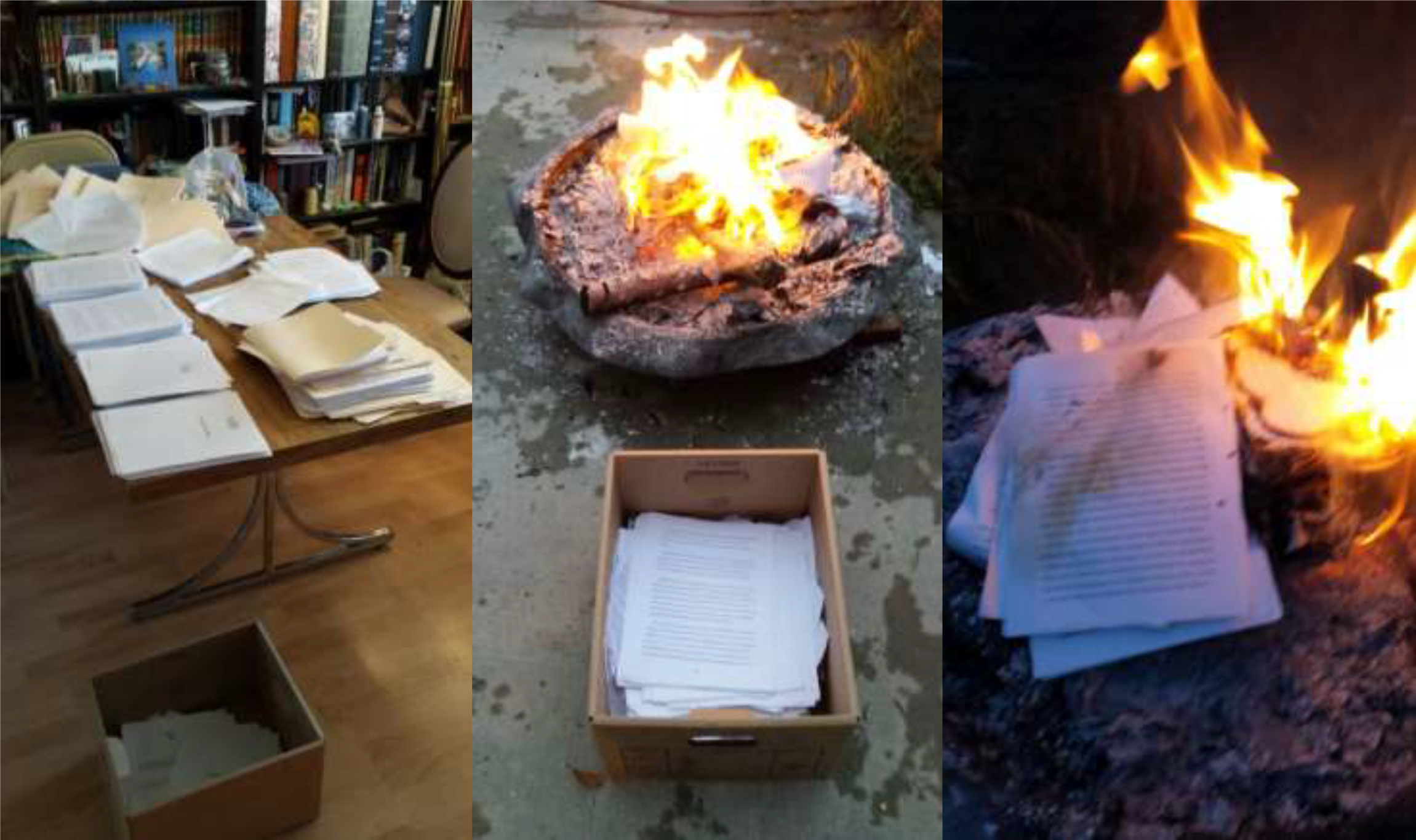
The hard truth about revising drafts is that it seems never-ending.
You tighten up the sentences, then notice that the verb tenses are out of whack. You fix the dialogue tags, but the voice is inconsistent.
And the more you mess with your writing, the greater the risk of overwriting; you can no longer see the forest for the trees, because you’ve clearcut the woods.
So, you rush through the editing phase, just to get it over with. But being in a hurry causes you to miss things that should (or should not be) in the final draft.
Aside from hiring an editor at this stage of the game, the best way to minimize the damage is to put yourself in the reader’s place by asking yourself questions like the following:
Is this part confusing?
Is that section too vague?
How can I make the next part of the story more compelling?
But eventually, all editing comes to an end. Or so you think. You read one of your edited stories, but find that something is still missing. Actually, a lot of things are missing.
Maybe there’s not enough description; only telling us how things look, but not where the action took place- or when, or why.
Then there’s the matter of accuracy. On Page 37, you say that Mr. X is the one who hit your car, but three pages later it’s Mr. Y. Questioning your sanity, you realize your memory has shorted out. You go to a journal entry and discover that Mr. Z is the real culprit.
Regardless of the issue, it’s plain that accuracy is important; and if you don’t catch the mistakes, your readers surely will.
But maybe lack of details isn’t the problem either. Maybe what’s needed is more background, or a deeper dive into your subject’s motivation for whatever is happening within the story.
In the end, it all goes back to source material. Is there something from your journals or letters that would add depth and impact? Does the story need the more background information- the kind you could find by doing a little research?
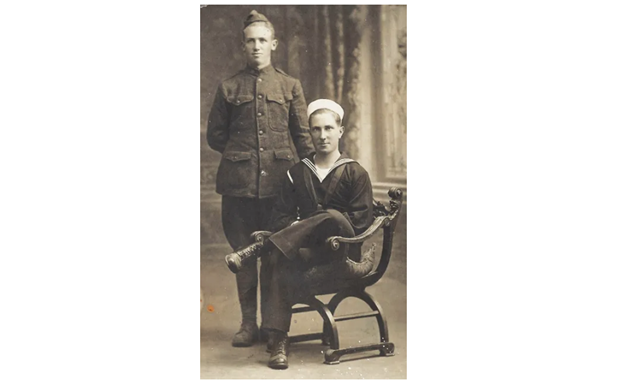
In the case of my grandfather Horace Quigley- a WWI veteran- I decided it was time to put together something coherent about his experience, based on the piles of letters and manila folders that had been gathering dust for decades- stuff no one else had had the time, desire, or resources needed to turn his story into a compelling account. But I had the time. I had the desire. And I had Word, along with a decent scanner.
What follows is a case study about how I tried to bring my grandfather’s war experiences to life. And though it’s technically a biography, I could have easily substituted “I” for Horace’s name and gotten by with it. Let’s just call it a hybrid memoir and leave it at that.
Horace was a farm boy from Ferdinand, Idaho who, upon reaching the proper age (in 1917), decided to enlist in the U. S. Army. He filled out the paperwork at Grangeville and waited. A week and a half later came the notice to report for a physical exam…

Then came the induction letter, informing Horace to report for duty on June 23, 1918…
And with that, the story really begins…
Camp Lewis: American Lake, Wash.
On June 23, 1918, around 2:30 pm, Horace boarded a train traveling to Camp Lewis. The number of passengers grew, all along the route west, from Idaho to Washington State.

By the time his train arrived in Tacoma, Washington, Horace’s group of recruits was 500 strong…
“Everybody said we were some wild, for we woke everyone between here and home, with one continual yell for Idaho.”
Horace’s best estimate was that all the boys from Idaho County would stay together for at least three weeks.
Shortly after arriving, the draftees had their first exam…
“I think most all of them passed,” he assured his mother.
Horace, Watts, and Roy were attached to 52 Company 13 Battalion, 166 Depot Brigade. As such, their living quarters were on the second floor of a bunkhouse next to Cal. Ave.
Once off duty, the three would perch in their upper floor window, a vantage point affording them a view of all the new recruits and soldiers marching past. But though they scoured the crowd for traces of anyone familiar, Sumner S. was the only man they recognized…
“I have not had time to look for Otto, but I will see him before very long if he is still here, which I think he is.”
The following day, the business of becoming a soldier continued, immunizations topping the list…
“We got shot in the arm a while ago and the worst of it is that we got it in both arms at once. I don’t know which shoulder my neck will draw over onto this time.”
Then there were drills and marching to endure…
“This is sure a great life here” Horace remarked. “I just got through stepping around like a bantam rooster and am so sore I can hardly move.”
In between the orders of the day, Horace squeezed in a few minutes’ worth of letter-writing, noting that tragedy had already struck for one young man.
“There was a fellow with us from Spokane who got a telegram today noon that his father was killed instantly in an auto wreck, and us fellows took up a collection and sent him home.”
All through the second day, trainloads of new soldiers arrived, the fifth such group composed of seventeen railroad cars.
“You can imagine something of what a nice little home we have here.”
“Well, time is short between spells and I will have to hang up. Tell everyone I think of them every day and write to them as soon as I can find time. I will write to Vata in the morning.”
By mid-July, Horace’s group is on its way south…
Stockton, Ca.

July 18, 1918
“Dear Mother:
“We are in Stockton now. Are having an awful good time. Wish I knew Uncle Burt’s address. We will be in Kearney to-night or in the morning. Will write more when I get there.”
By Train from Camp Kearney to Camp Mills:
It’s estimated that 1,147,013 men traveled by troop trains during the month of July for the 3,500-mile trip from Camp K to Camp Mills.
Based on Buster Keaton’s notes about traveling from west to east, his trip from Camp Kearney to Camp Mills took from July 28 to August 5 (eight days). This would mean that Horace left Kearney on July 31 or August 1, 1918 in order to arrive on August 9th.
As for the route Julius Holthaus took, it left Camp Kearney on July 30th and then:
· Passed through Linda Vista and San Bernardino
· Rode on Santa Fe Pullmans from SB to Kansas City.
· On to Needles (Aug 1)
· Crossed into Texas Panhandle (Aug 2)
· On to Oklahoma
· Then Kansas City (Aug 3), where they transferred to the Chicago, Milwaukee and St. Paul railway.
· Into Ft. Madison, Iowa (Aug 3)
· Into Chicago (Aug 4)
· Through Akron
· Pennsylvania
· Susquehanna, NY (Aug 5)
· Through Olean
· Finally at New York City (Aug 6)
· And on to Camp Mills…
NOTE: The outside of all Grandpa’s letters bore the stamp “Passed As Censored.”

Somewhere in Europe
The following assumes that Horace landed in England, as that is where other groups of the AEF disembarked:
If Horace left the US on August 12 (the date of his last letter from NY), the earliest he could have arrived in Europe would be August 22 or 23, based on the assumption that the trip across the ocean to Europe took the same amount of time as it would coming back- eleven days.
In a letter from October 12, Horace says “the 12th of August, just before I started across.” So that pretty much confirms the departure date, which would also mean he wasn’t at Camp Merritt for any substantial length of time.
The latest he could’ve arrived in Europe (England) is harder to determine. In a letter dated October 9, 1918 (from France), Horace mentions sightseeing one month earlier, in France. This creates an eighteen-day window (August 22- September 9), within which Horace had to have arrived.
And then there are the letters, which sometimes speak for themselves:
Approx. September 9, 1918
“I was in a church that was over 1300 years old. It was the most wonderful sight I have seen in France. There were two others about 700 years old but I didn’t go into them, for they were not old enough.
I and a corporal from my detachment went down in a tomb where a queen was buried in the year of 1300 or something. The tomb was dug in the ground right beneath that church I told you about, and went down about 200 feet. There was a winding stairway that made it seem twice as far. We didn’t have any guide so we had to take a candle to find our way, for it was dark as midnight. We went slipping down, neither of us saying a word and just when we got to the bottom our candle went out, and believe me we came out of there on high. I never found out who the queen was or what she looked like. Anyway, I didn’t see her anywhere about the place as I was going or coming.”
Ship Ahoy!
Camp Merritt: Cresskill, NJ.

The hour of 3 am, January 3, 1919 couldn’t come soon enough for Horace. But though the ship had docked and the homeland was in view, it wasn’t until 9:30 am that the men finally made it ashore. Horace’s described what happened next.
“One of the warmest welcomes that we have ever got any where. The people were just swarming at the docks and made more noise than a bunch of drunken Frenchmen. Then they followed us through the streets to the rail road station, giving us pies, cakes and all kinds of good eats. It wasn’t very hard for us to get away with them either for we were just about starved when we landed.”
And that, my friends, is one way to begin building someone’s biography, or your own memoir…
Comments and questions are required welcomed. Ask me anything about memoirs, journaling or personal histories.

Comments
No comments yet. Be the first to comment!