Sharing thoughts, ideas, and unsolicited advice about memoirs, journaling, and creative nonfiction.
Preserve Those Journals and Notebooks Before It’s Too Late
Get motivated, make a plan, then build something of lasting value
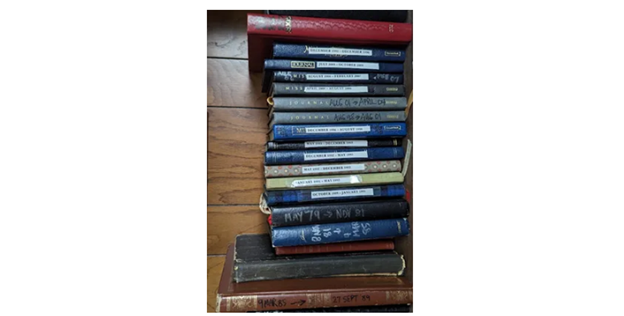

As the years pass, I’m not sure which is fading faster- my documents or my health. Aside from dietary improvements, or a better exercise regimen- neither of which are going to happen, me being set in my ways at 71- there’s not much I can do to slow the march of time.
But when it comes to personal records, there are measures I’ve taken to preserve memories, events and accomplishments, before they all fade into oblivion- measures that you can and should take, as well.
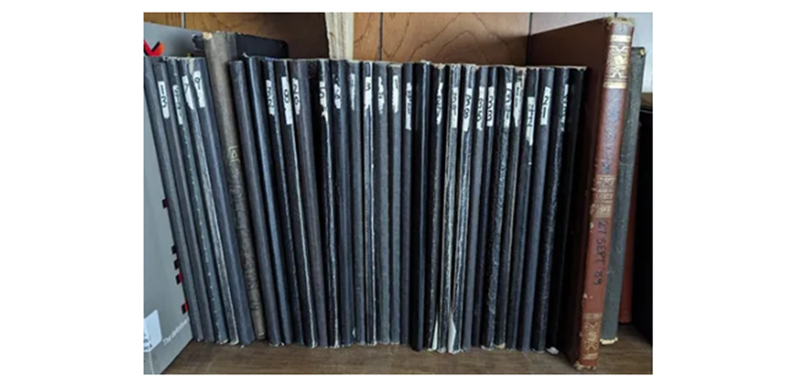
Follow along as I delve into the development of a preservation plan and a way to see it through…
First off, why preserve records?
When I ask family or friends this question, the responses vary:
1) Sorry, Dan, but I don’t live in the past. What’s done is done; I believe in the here and now.
2) I’d like to put together a scrapbook, but everything is such a mess…
3) I’d like to, but I just don’t have the time. Maybe next year.
4) I have a lot of junk from the past, but I don’t know if it’s important. I should probably just toss it all and move on.
The above responses point to an innate desire to save old documentation. But desire alone won’t preserve old records. Action has to be taken now, before time and the documents are gone.
Case in point: I have postcards from the 1970s that look like they were written yesterday…
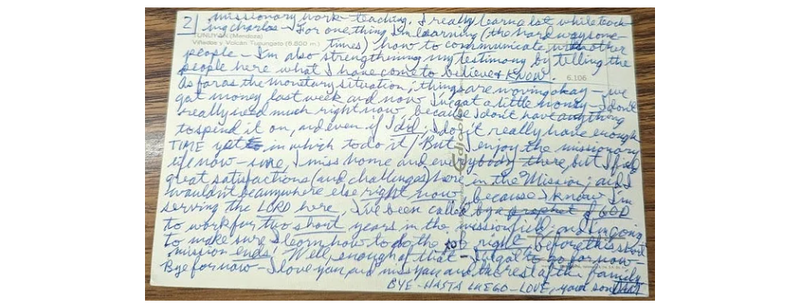
But certain kinds of paper and ink conspire, entering into a death pact, with ink usually getting the shorter end of the stick. I have letters from the same period as the postcard above, where the onionskin paper seems to be absorbing the ink or causing it to fade…
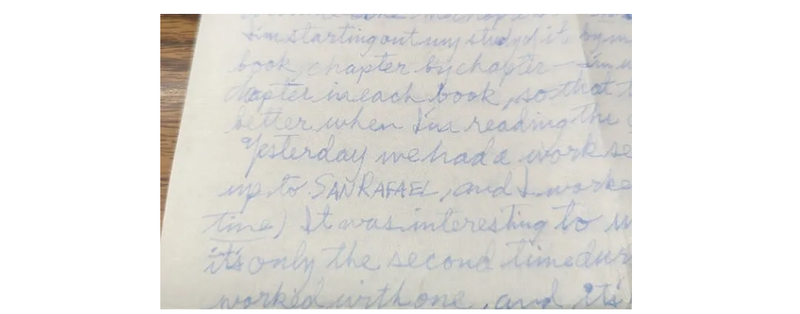
I could share other examples where the ink is almost gone. Fortunately, I took the time, some twenty years ago, to transcribe these fading letters, preserving them in both hard copy and electronic form.
But time isn’t the only enemy of paper records. Mice and silverfish chow down on paper. Moisture and mold wreak havoc. And in some cases, the paperwork just disappears.
The only cost-effective and secure preservation measures are transcription and duplication (copying).
How Should Records Be Preserved? Scanning vs Transcription
Practicality: There are all sorts of scanning devices on the market; ads make the process look alluring, even fun. Just run the reader across a page and you have an instant copy.
But what if you’re a late adopter like me, or have connectivity issues when it comes to hooking up devices to a PC? And where do you store or send the copy? What if you want to scan three hundred pages of something? And how long will it take you to scan all those words?
Readability: If you’re preserving photos and other images, scanning is a great way to go. You can insert those saved images in a memoir, biography, or memorial. But readability issues arise when scanning handwritten documents.
My grandmother was a copious documenter. She kept journals and scrapbooks for years. But Grandma had palsy, and as she aged, her handwriting got so bad that reformed Egyptian would be easier to read.
When I look at her scribblings now, I need an interpreter, said task falling to my mother. That being said, though content may be tough to decipher, scanned writing does constitute a valuable record. Just remember that saved records are not the same as readable records.
Usability: More important than readability is usability. Though the technology that allows for manipulation of scanned words exists, a Word/text file is a lot easier to work with, from an editing standpoint. If I want to insert a portion of a transcribed letter or postcard into some other document, I do a simple cut-and-paste.
Condition of Source Material: I have journals that are close to fifty years old. Like my joints, the journal bindings are wearing out. Every time I open some of them, the journal’s spine cracks and tears a little more. It won’t be long before I have to store some of them in envelopes, until I can figure out how to glue them all back together. I can just imagine what would happen if I tried to open a 200-page journal and flatten each page enough for the scanner to secure a decent image.
The Verdict: Though hand scanning is a wonderful technology, I don’t have the patience to engage in such a task. And my hands shake a bit, these days, which defeats the purpose of scanning.
So… since I’m only working with personal docs, transcription is a better fit.
Sizing Up the Elephant…
So, you’ve convinced yourself that before Mr. Entropy has his way with all your personal records, you’ll take steps to preserve those letters, postcards, memos, journals, diaries, and greeting cards full of hastily scribbled messages.
But as you approach the piles and boxes loaded with all this stuff, you stop in your tracks. A sick feeling washes over you, and you consider saying “The hell with it; I’ve got a nap to take, or soaps to watch, or I need another session with Balatro. I can’t deal with this. It’s just too much.”
Well, I’ve felt the same way. (And to be honest, I’m still not brave enough to tackle the fifteen shoe boxes packed full of photos and negatives, all lying in wait in my darkened closet.)
After several failed attempts, I realized that it would take small steps to get where I wanted to go. But after completing even one, at least I’d be further along than I was before.
So, here’s a suggestion…
One Piece at a Time
Start by putting letters in one pile, postcards in another, cards in another, and on and on, until you’ve got all the documents sorted. Don’t worry about chronological order right now, as that may push you over the edge.
2) Set aside any documents you don’t want to work on (at least for now).
3) Get your paws on some expandable binders/file folders.
4) Grab the letter pile and order it by year. If you can’t find any sort of date, don’t despair; just set it aside for the moment.
5) Find the earliest dates and put those letters in the first binder slot.
6) Label the slot/folder tab with the month or year of the letters. Then do the same for the other letters, until you have all of them filed.
7) Go back and insert the postcards or whatever pile is next. Label tabs if necessary, but make sure that letters and other docs are sharing slots, where possible.
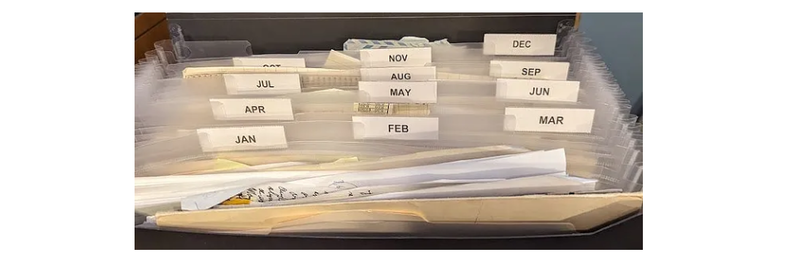
With this done, you have all the cats herded into one place. Now you can move on to the next step.
How Do I Store All This Stuff?
Decide where the finished product will be stored or back up.
Cloud Storage: Allows for easy Internet access, and unlimited storage space- but hackers pose a security risk.
Flash Drive: Portability, great backup option, but could fail or be compromised if someone else gets their mitts on the drive.
Electronic File: Stored on your PC, so they’re easy to access. But storage is limited, file management is a chore, and if the PC dies, you may lose some or all of your files.
Content Management App: Also stored on your PC, but apps like Scrivener help you organize your thousands of files, as well as providing automatic file backups. But if your PC dies, you may lose some or all of your files.
Hard Copy: Permanent copies of all your work, though file organization and physical storage space will be a challenge, once you’ve generated hundreds of transcribed docs.
The Verdict: Leave yourself some options, based on a worst-case scenario. My own preference is hard copies and flash drives, with those same files stored in Scrivener.
Transcription Choices
Before the heavy lifting begins, you have several options, all with their pros and cons.
Type It Yourself: For you touch-typists out there, this may be the best solution. All it costs you is time- unless you’re short of that. For hunt-and-peck folks like me, TIY is most definitely not an option.
Hire a Transcriptionist: A huge time-saver, if that’s what you’re short on. But it will cost you. Ballpark estimates for a transcriber range from $0.75 to $1.50/minute, and $15.00 to $30.00/hour.
Speech Recognition Apps: Imagine sitting at your PC or laptop, speaking into a mic, and watching as the computer turns your spoken words into text.
I love the idea, but have had trouble finding an app that plays well with my voice. And when I used Dragon, the company ended up releasing an upgrade with enough strings attached that I couldn’t afford it.
AND, the most troublesome aspect for me was having to go back and read every freaking line and paragraph in search of errors.
The bottom line is that record preservation is vitally important.
Find a method that works for you.
Then get to work.
Comments and questions are required welcomed. Ask me anything about memoirs, journaling or personal histories.

Comments
No comments yet. Be the first to comment!