
Sharing thoughts, ideas, and unsolicited advice about memoirs, journaling, and creative nonfiction.
Setting Up a Low-Cost Neighborhood Library

The desire to share things one enjoys is universal- and books are no exception. And if you love books as much as I do, sharing favorites can be rewarding, though problematic, at times.
Sure, Rex Stout’s greatest creations- detectives Nero Wolfe and sidekick Archie- are a blast to hang out with. But some people don’t care for mysteries.
Then there’s P. G. Wodehouse, with his sidesplitting tales of the idle rich, but terminally dim-witted Bertie Wooster and his valiant butler Jeeves, the latter helping extricate Mr. W from one disaster after another. But some folks would rather read about the real England than experience Wodehouse’s beatific, ethereal version.
I’ve learned that not all tastes are the same, especially when it comes to reading material. Let folks make up their own minds.
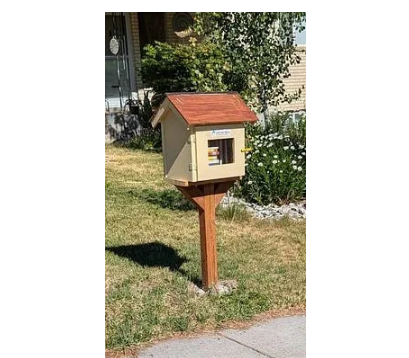
Down the street from my place, I one day spotted a tiny, house-shaped structure mounted on a post in front of a neighbor’s property. Drawing closer, I was delighted to find that it was crammed full of books. A small sign on the front stated that this was a “Little Library,” and that anyone was free to take or trade the tomes resting inside. And so I did.
Sometimes the selection was too narrow, other times it was just right. But since I never knew what the little library might contain, there were pleasant surprises in store; as such, the tiny house became a favorite side trip for me, my wife, and the grandkids.
After a year or two, I found myself wanting a “little library” in my own front yard. And since I’d been trying my hand at woodworking, this was the opportune time to build.
I searched online and found hundreds of examples, then landed on one that suited me, and went for it.
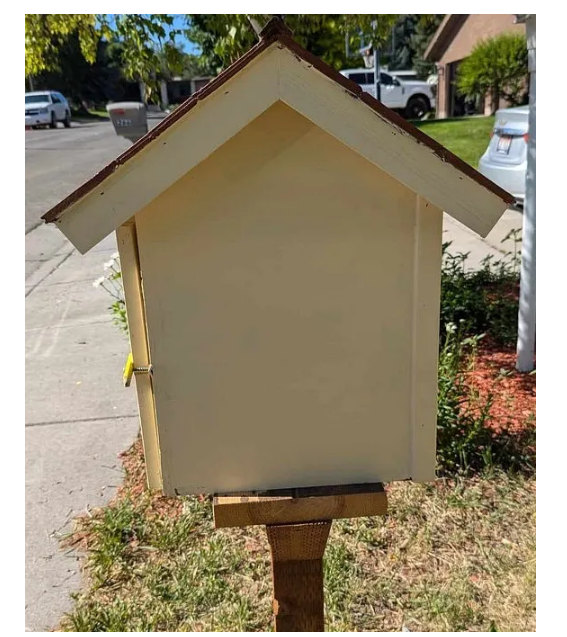
What I like about this library design is its simplicity; that and the fact that it can be built out of wood scraps: 1 x 2s, 1 x 4s, a short piece of 2 x 8, a piece of plexiglass, and some small plywood pieces. The only thing I had to buy was an eight-foot, pressure-treated, 4 x 4 post.
As for tools, you only need a hand saw (or miter saw), hammer, drill, tape measure, and a square. To hold everything together, use water-resistant glue, rust-proof screws, and brads. (Don't use nails, unless you want the house to fall apart and leak like a sieve.)
Follow the plans as best you can, and don’t be afraid to modify them, as needed. After all, you’re not building a piano.
After you build the house, use a suitable caulk on all its joints, then mount it to a piece of pressure-treated 2 x 8. Then cut a couple of short pieces of 4 x 4 (cut on both ends at 45-degree angles); attach those to one end of the 4 x 4; then attach the house (and its plate) to the top of those angled 4 x 4s.
Pick a suitable spot in the front yard, near the sidewalk, and start digging a small hole. (Make sure there are no sprinkler pipes, water lines, gas lines, or electric cables where you dig.)
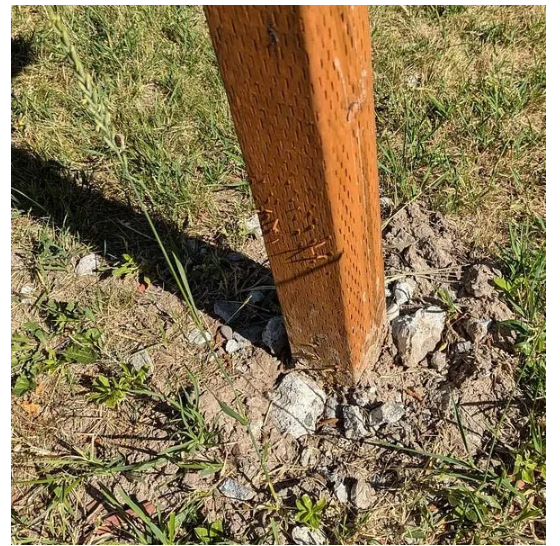
As you dig, check the length of the 4 x 4, and use a saw to adjust the hole depth, as needed. You don't want the library to be too high or low.
Stick the post in the hole and start filling in around the post with some ready-mix concrete that you’ve stirred up in a wheelbarrow or small tub. Or take the easy (read “cheap”) way out: dump in a mixture of dirt and small rock chunks.
Check the post with a level, as you proceed, to make sure the house is sitting straight up and down.
Tamp the stuff down with a 2 x 4, every so often, and add water occasionally, until the hole is filled and the post solidly in place.
Attach the door, using a couple of cheap hinges.
As for a latch, use your imagination. (I drilled a hole in a carpenter’s pencil, then attached it next to the door with a long screw.)
And voila! You’re done.
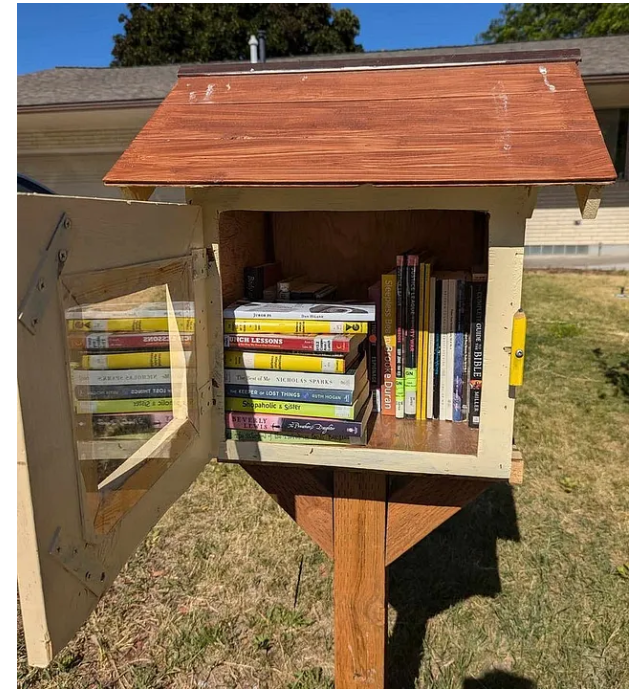
The best part is filling the house with books, then watching as the curious and the book lovers stop by to make withdrawals or deposits.
These little libraries not only encourage readers young and old to expand their literary horizons; they give you and others the chance to pass on books you want to share.
If you’d like more details about how to build one of these little libraries, please respond. I’ll be glad to walk you through the process.
Comments and questions are required welcomed. Ask me anything about memoirs, journaling or personal histories.

Comments
No comments yet. Be the first to comment!