Sharing thoughts, ideas, and unsolicited advice about memoirs, journaling, and creative nonfiction.
Janus and Me
Confessions of an old soul
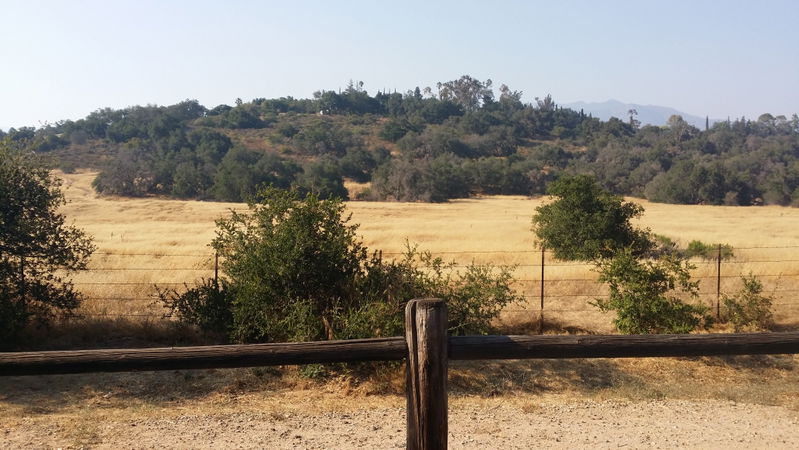

When I was a kid, I looked forward to the weekend. Freed from school classes and homework, I could hang out with friends, space out in front of the TV, or roam my family’s twenty-acre farm for hours on end.
But sometime during the day the phone would ring; on the other end of the line was Grandma, wanting to speak to Mom. I’d hand the phone off, then head outside- returning a couple of hours later to see my mother ironing or cooking, the receiver abandoned to the kitchen counter as Grandma went on and on and on…
I felt sorry for my mother. Based on past experience, I knew she’d be stuck on the horn for the duration, while Grandma recited the Past- people and places and events from thirty, forty, even fifty years earlier. And I wondered why my mother put up with it.
But more then that, I wondered why Grandma seemed stuck in a world that no longer existed, populated by people long gone to the spirit world, the accompanying events having been forgotten by everyone else. My grandmother felt compelled to keep the flame of family history alive, even though the wick was nearly spent.
As I grew older, I believed that Grandma used her all-season pass to the Past as a way of avoiding the Present. But as Mom got older, I noticed that she was doing the same thing; it seemed that mother and daughter had a penchant for family history- a pastime which had expanded to embrace scrapbooks, photos, coins, and the like.
And as I grew older, I too was lugging around scrapbooks and photos and other memorabilia.
What had happened to me?
Was I turning into one of those weirdos?
A throwback who “lived in the past?”
It wasn't until my forties- when I started writing stories and essays- that I stepped away, from time to time, for an objective view of what I was reading, listening to, and watching: “old stuff” like Twain, Benchley and Wodehouse; Debussy, Rodgers & Hammerstein and The Beatles; Hitchcock, The Thin Man, and Perry Mason.
It seemed that since my teens, moments and entertainment from the past were much more interesting than the present. Sure, I kept up with current events, but in the long run I was finding my fun in What Used To Be.
For whatever reason, I had become what people now refer to as an “old soul.”
Aside from heredity, what I assumed to be a longing for simpler days drove me to maintain a personal history- for over fifty years. But the desire to journal is a double-edged sword. Sure, there are a lot of treasured memories to record- but also a lot of bad ones. And the fact that they all elicit strong emotions is telling.
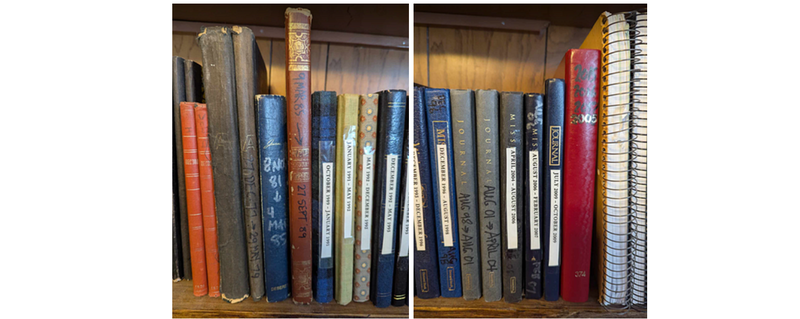
Compounding the situation is the fact that the more I look back, the more I find- as if I’m in possession of an emotional photographic memory. But could there be some other reason for this constant glancing into Life’s rearview mirror?
Several years ago, I was asked to speak at a church meeting about New Years resolutions- a topic I tend to avoid at all costs. A habitual nonconformist for most of my life, the sheep-like practice of making resolutions every January remains at the top of my list of Things I Never Want To Do.
But determined to make the best of a bad situation, I did some research- which is when I learned about a Roman deity named Janus. The god in question was endowed with two faces; one that looked to the past, while the other gazed forward, into the future. (No wonder the first month of the year was named after him.)
One online source describes Janus this way:
“Janus presided over the beginning and ending of conflict, and hence war and peace. The gates of a building in Rome named after him (not a temple, as it is often called, but an open enclosure with gates at each end) were opened in time of war, and closed to mark the arrival of peace. As a god of transitions, he had functions pertaining to birth and to journeys…” https://en.wikipedia.org/wiki/Janus
In a deeper sense, Janus was the guardian and protector of the threshold that encompasses beginnings and endings, and everything in-between; he was charged with keeping the passage of thoughts between past and present open and unfettered.
And it is because of this balanced ability that he would never find himself trapped in the past, or accused of being some sort of misguided seer.
Well, the church talk went well. And though the experience didn't convert me to the practice of making New Years resolutions, the talk’s subject matter gave me a new appreciation for journaling:
It preserves valuable life lessons.
It helps you see how much you’ve grown.
It gives loved ones a true view of the kind of person you were and are.
It provides fodder for lots of great stories and essays.
It instills gratitude for what you have now.
It can make you a better writer.
I used to feel ashamed of my interest in the past, accused by some of wanting to live there- as if looking back were a way of avoiding the present, with all its challenges.
And yet I wonder if memory and the ability to write aren’t somehow linked- that since most of my memories have strong emotions tied to them, they represent a lot of existential baggage that can only be resolved by first recording them, then going back and writing about why they happened, how I reacted, and what it means now.
And what it all means for my future.
Comments and questions are required welcomed. Ask me anything about memoirs, journaling or personal histories.

Comments
No comments yet. Be the first to comment!